
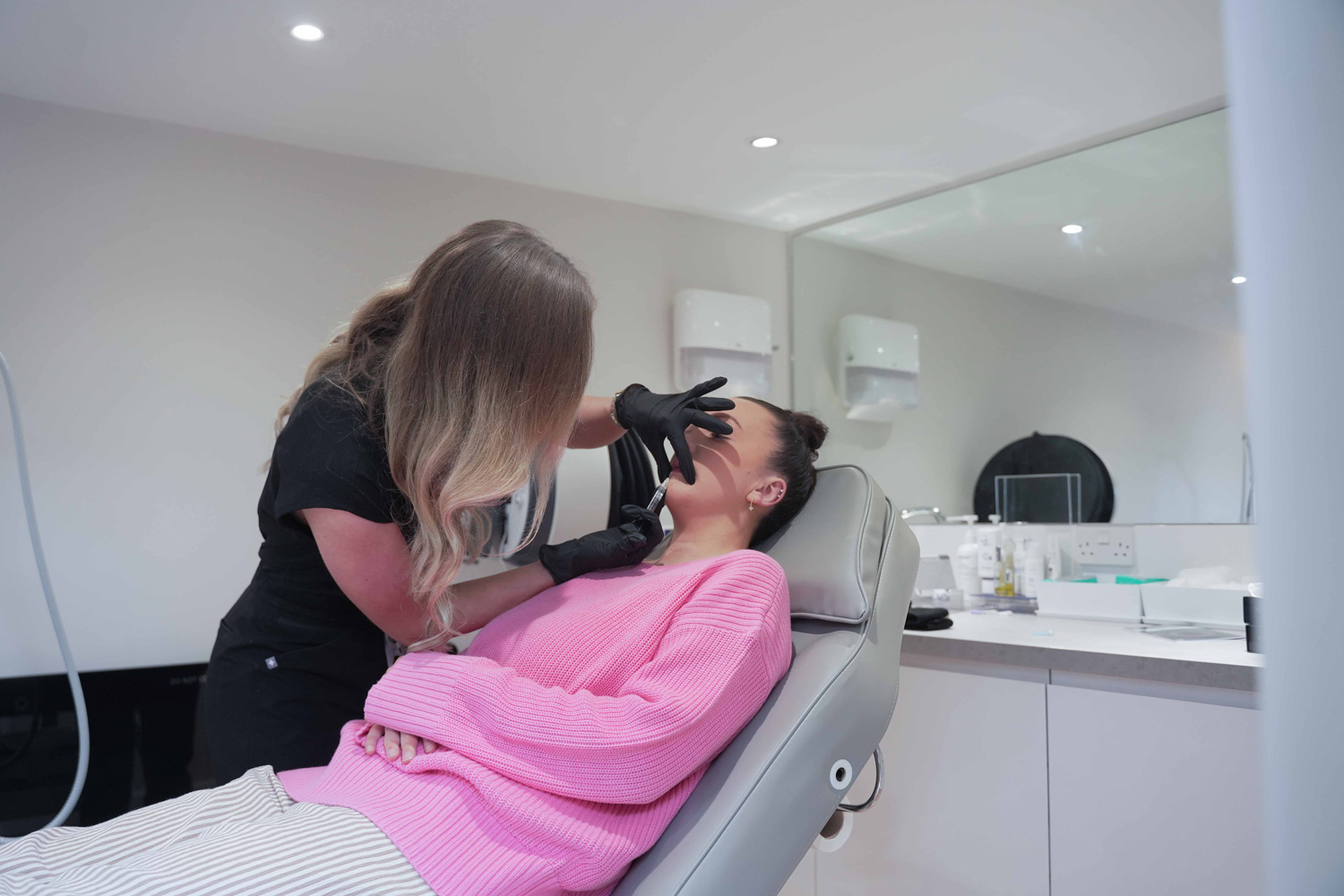
Inside the treatment room at Exthetics, Exeter.
EXTHETICS JOURNAL / PATIENT GUIDE
How To Choose A Safe Aesthetic Clinic
A nurse prescriber’s guide to choosing a qualified practitioner, understanding the risks and achieving a natural-looking result
By Anna, Independent Nurse Prescriber
Aesthetic treatments have never been easier to access.
Treatments that once sat almost exclusively behind the doors of specialist clinics are now advertised across social media, offered in a wide variety of settings and sometimes priced to look little different from any other beauty appointment.
The clinical reality is rather different.
Botulinum toxin is a prescription-only medicine. Dermal fillers are injected into areas of the face containing an intricate network of blood vessels, where complications can be serious. Energy-based treatments can cause burns, scarring and changes in pigmentation when used incorrectly.
These are not risk-free beauty treatments. They are clinical procedures, and your outcome depends on far more than the name of the product being used.
It depends on the person treating you, their training and judgement, the assessment they carry out before treatment, and the clinical systems standing behind them if something does not go to plan.
The same is true of achieving a natural result.
Most patients I meet want some version of the same thing: to look fresher, less tired or more confident, while still looking like themselves. Many are also worried about looking overdone.
Safety and natural-looking results often come from the same place: a practitioner who assesses you properly, understands facial anatomy and ageing, treats conservatively and is prepared to tell you when a treatment is not appropriate.
As a registered nurse and independent prescriber, part of my clinical work involves assessing complications or results that began elsewhere. Some problems are unavoidable, even with excellent practice. Others may have been prevented through better assessment, appropriate patient selection, safer prescribing, more suitable treatment choices or earlier recognition of a complication.
So, if I were helping a member of my own family choose a safe aesthetic clinic, these are the things I would want them to check.
THE ESSENTIAL CHECKS
If You Only Remember Five Things
Check who is treating you and verify their credentials yourself. If a prescription medicine is involved, understand who is prescribing it and how you will be assessed.
Expect a proper consultation, not simply a few questions immediately before treatment. Ask what happens if there is a complication and how you would access help.
Choose the practitioner whose judgement you trust, not simply the practitioner offering the lowest price.
Here is how to look at each of those areas in more detail.
Check Who Is Actually Treating You
In England, there is not yet a national statutory licensing scheme requiring every person offering non-surgical cosmetic procedures to hold a particular aesthetics qualification.
That means titles can be misleading.
Someone may describe themselves as an aesthetician, cosmetic practitioner, advanced aesthetic practitioner, medical aesthetics specialist or even a master injector. These descriptions do not necessarily tell you what professional registration or recognised qualifications they hold.
If your practitioner is a regulated healthcare professional, you can check their registration independently and free of charge.
| Professional role | Register to check |
|---|---|
| Doctor | GMC register |
| Nurse or midwife | NMC register |
| Dentist or other dental professional | GDC register |
| Pharmacist | GPhC register |
Ask your practitioner for their full name and registration number, then check it yourself.
Professional registration does not automatically make somebody an expert in aesthetic medicine. They still need appropriate aesthetics-specific education, training, competence and experience.
However, registration does mean the practitioner is accountable to a statutory regulator and must work within professional standards. That distinction matters.
A note about dental professionals
Different members of the dental team have different legal scopes of practice.
A dental hygienist or dental therapist may be registered with the GDC, but they do not have the same prescribing rights as a dentist. Within the GDC professions, dentists are the registrants able to prescribe botulinum toxin.
So do not simply ask whether somebody is “GDC registered”. Ask what their professional role actually is.
Ask thisWhat is your professional background and registration number, and where can I check it?
A good practitioner should be completely comfortable answering that question.
Understand Who Is Prescribing Your Treatment
This is one of the most important questions patients can ask, yet surprisingly few do.
Botulinum toxin is a prescription-only medicine.
If it is being used for your cosmetic treatment, there must be an appropriate prescribing process for you as an individual patient.
Professional standards require appropriate clinical assessment before injectable cosmetic medicines are prescribed. Regulators including the GMC, NMC and GDC specifically require in-person assessment for these treatments rather than routine remote prescribing.
If your injector is also an appropriately qualified independent prescriber, they may carry out this assessment themselves.
If the person injecting you is not the prescriber, ask who the prescriber is, when you will meet them and what role they have in your ongoing care.
You should be cautious if you are told that a prescription is being “signed off” by somebody who never sees you, or that a prescriber simply supplies medicines to the clinic without assessing individual patients.
This is not an administrative technicality. Good prescribing is an important part of safe clinical care.
Why some clinics may not treat you immediately
Patients sometimes assume that a clinic is more efficient if consultation, prescribing and treatment all happen instantly. That is not necessarily the case.
Medicines legislation and supply arrangements differ according to the professional circumstances of the prescriber and the clinic.
For example, in England, nurse independent prescribers cannot simply hold general stock of prescription-only medicines for aesthetic use in the same way that medicines may be held under some other lawful arrangements.
In some nurse-led clinics, medicine prescribed for an individual patient therefore needs to be dispensed through an appropriate pharmacy supply route before treatment takes place.
That can mean consultation and treatment happen at separate appointments.
It is not necessarily inconvenience or poor organisation. In some circumstances, it is evidence that the medicines governance behind your treatment is being taken seriously.
And having time between consultation and treatment can be useful. It gives you an opportunity to consider what has been discussed without feeling under pressure to proceed.
Ask thisWho is prescribing my treatment, and will that person assess me in person?

Prescribed medicine drawn up from a labelled, in-date ampoule. Batch and expiry details are recorded in your notes.
Look Beyond The Certificate Wall
A clinic wall full of certificates can look reassuring, but the number of certificates tells you very little on its own.
Aesthetic education and training remains inconsistent across the sector, and there are still no universal statutory qualification requirements covering every practitioner and every non-surgical aesthetic procedure in England.
Courses vary enormously.
Some involve a very short period of training and limited practical experience. Others involve substantial postgraduate study, supervised practice, assessment and ongoing competency development.
For injectable treatments, Level 7 education is a widely recognised sector benchmark for advanced practice, although holding a Level 7 qualification is not currently a universal legal requirement for everybody providing injectables.
So rather than simply asking “Are you qualified?”, ask: What aesthetics-specific qualifications do you hold? Who awarded or accredited the qualification? How much supervised practical training did it include?
How long have you been carrying out this particular treatment? What continuing professional development do you complete? What training have you undertaken in recognising and managing complications?
You can also look for voluntary professional registers and accreditation schemes such as the Joint Council for Cosmetic Practitioners (JCCP) and Save Face.
Neither replaces statutory professional registration and neither is compulsory for every practitioner, but they can provide another useful layer of information when you are carrying out your checks.
Healthcare professional does not automatically mean aesthetics expert
Being a doctor, nurse, dentist or pharmacist gives somebody a regulated healthcare background. It does not automatically prove competence in every aesthetic procedure.
Look for both appropriate professional accountability and specific training and experience in the treatment you are considering.
Treat The Consultation As Part Of Your Treatment
A good aesthetic consultation should not feel like an obstacle to get through before treatment begins.
It is part of the treatment.
This is where your practitioner decides whether the procedure is appropriate for you, and where you decide whether you trust the person sitting opposite you.
A thorough consultation should normally include: your relevant medical history; current medication and allergies; pregnancy or breastfeeding where relevant; previous aesthetic treatments and any previous complications; an assessment of your face, skin or treatment area; discussion about what is actually concerning you; realistic treatment options; the expected outcome and limitations; material risks and possible complications; alternatives to treatment, including doing nothing; informed consent; appropriate clinical photography where relevant; aftercare and what happens if you have concerns.
It should also give you an opportunity to ask questions without feeling rushed.
Be cautious of the five-minute consultation
A consultation squeezed into the few minutes before a needle comes out is unlikely to give either you or the practitioner much time for thoughtful decision-making.
There will be circumstances where an established patient and practitioner appropriately consult and treat during the same visit.
But particularly if you are new to aesthetics, considering a significant change, or unsure what treatment you want, there is nothing wrong with going away and thinking.
Good practitioners are comfortable giving patients time.
Ask about your clinical records too
You should expect appropriate clinical records to be kept.
That might include your consultation, medical information, treatment plan, consent, product details, batch numbers where relevant, treatment records and photographs.
You are entitled to ask how this information is stored and protected.
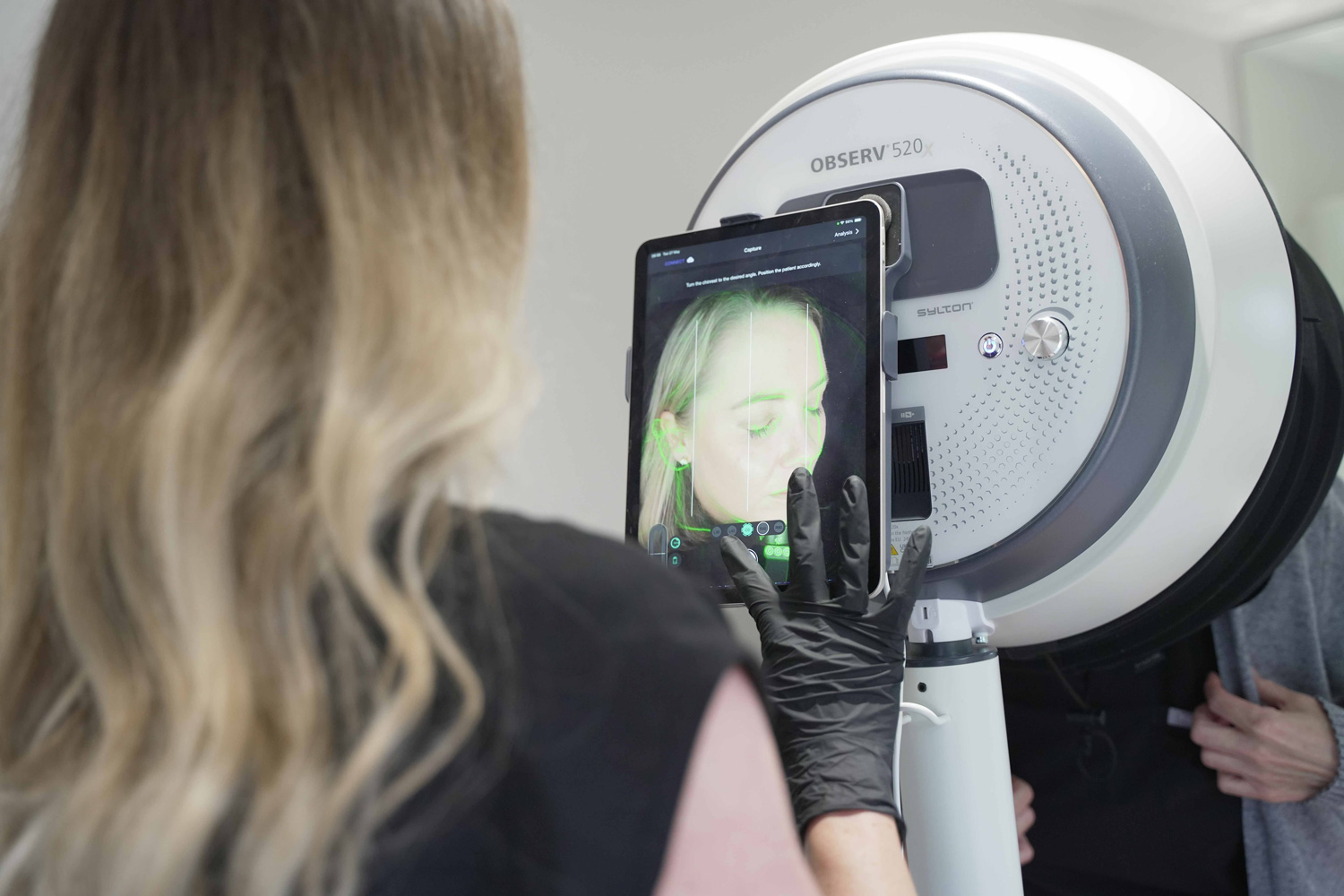
Skin assessment at Exthetics. Your treatment plan should begin with an assessment of you.
Listen Carefully To How The Clinic Talks About Results
If looking natural is important to you, the consultation will tell you a great deal.
Good aesthetic medicine is not simply about removing every line or filling every area where volume has changed.
Faces age in complex ways.
Skin quality changes. Fat distribution alters. Bone and structural support change. Muscles continue to move. Genetics, lifestyle, sun exposure and general health all contribute to how somebody looks.
A thoughtful practitioner looks at the whole picture.
Signs that a practitioner is thinking carefully about your result
They assess your face before discussing how much product you “need”; they ask what bothers you rather than telling you what is wrong with you; they explain what they would not treat and why; they are prepared to recommend less than you originally requested; staged treatment is discussed where appropriate; realistic limitations are clearly explained; they talk about skin health and skincare as part of the overall picture; they consider proportions and facial movement rather than treating one isolated line; they are willing to tell you that treatment is not necessary.
Things that would make me pause
The amount of product is decided before your face has been assessed; a package dictates exactly how many millilitres must be used; everyone in the clinic’s portfolio appears to have a very similar result; you feel that additional treatments are being “found” for you during the consultation; you are encouraged to do more simply because more product is available; you are made to feel anxious about normal ageing; guaranteed or dramatic results are promised.
Ask to see examples of the practitioner’s own work.
Ideally, look for patients of a similar age, facial structure or starting point to you.
Where possible, images should be taken in comparable lighting, at similar angles and without filters that make meaningful comparison difficult.
Ask what treatment was actually carried out and whether the result shown happened after one appointment or several.
One of the most reassuring things a practitioner can say is: “I don’t think you need that.”
Further reading: Lip fillers in Exeter: natural enhancement by a medical expert.
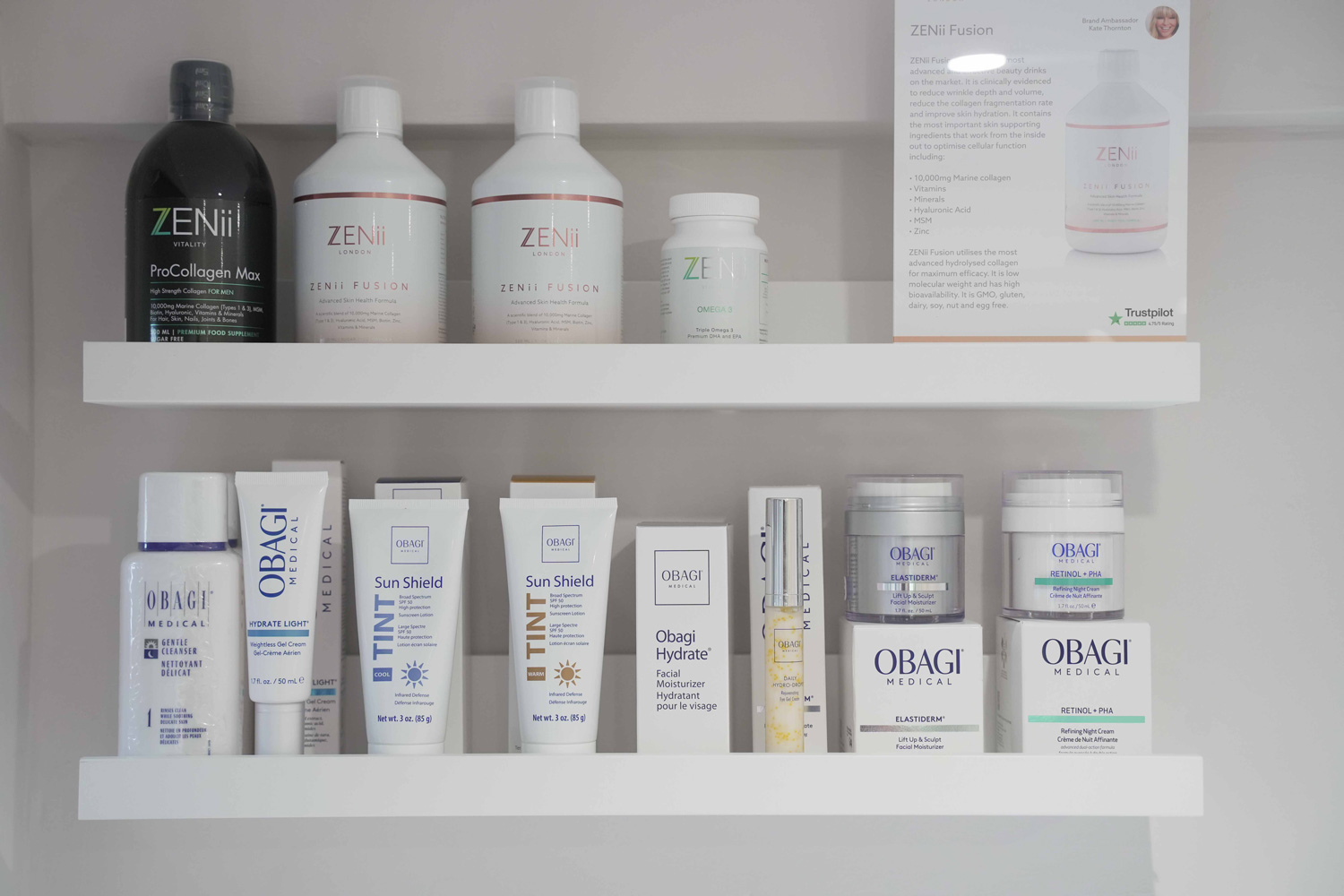
Skin health is part of the result. A good plan often starts before anything is injected.
Look At The Environment And Ask About The Products
Aesthetic treatment should take place in an environment suitable for the procedure being carried out.
Do not assume that a beautiful interior automatically means good clinical standards, and equally do not assume that a clinical room has to look like an NHS treatment room.
What matters is whether the environment supports safe practice.
For injectable treatments, I would expect appropriate: hand hygiene facilities; infection prevention and control procedures; clean treatment surfaces; sharps disposal; clinical waste arrangements; safe medicine and product storage; privacy; emergency equipment and protocols appropriate to the treatments offered.
Be particularly cautious about temporary or poorly equipped environments where the practitioner cannot demonstrate how infection control, waste management, medicines storage, privacy or emergency care are managed.
A practitioner can operate from premises shared with other businesses and still provide an appropriately equipped clinical treatment room.
The name over the front door matters less than what happens inside the room.
Ask what is being injected
You have every right to know what product is being used.
For prescription medicines, there should be a lawful prescription and medicines-supply process.
For dermal fillers and other injectable products, the clinic should purchase through reputable, traceable supply channels and maintain appropriate product and batch records.
“What product are you using and where has it been sourced?”
Your practitioner should be able to answer.
Products should be appropriately packaged, stored and traceable. Be cautious of products with unclear provenance, products purchased through questionable online channels, or a practitioner who appears irritated by being asked.
Counterfeit, falsified and inappropriately sourced aesthetic products do exist.
Price alone should never dictate product choice.
Further reading: SkinPen microneedling: why the right device matters for your skin.
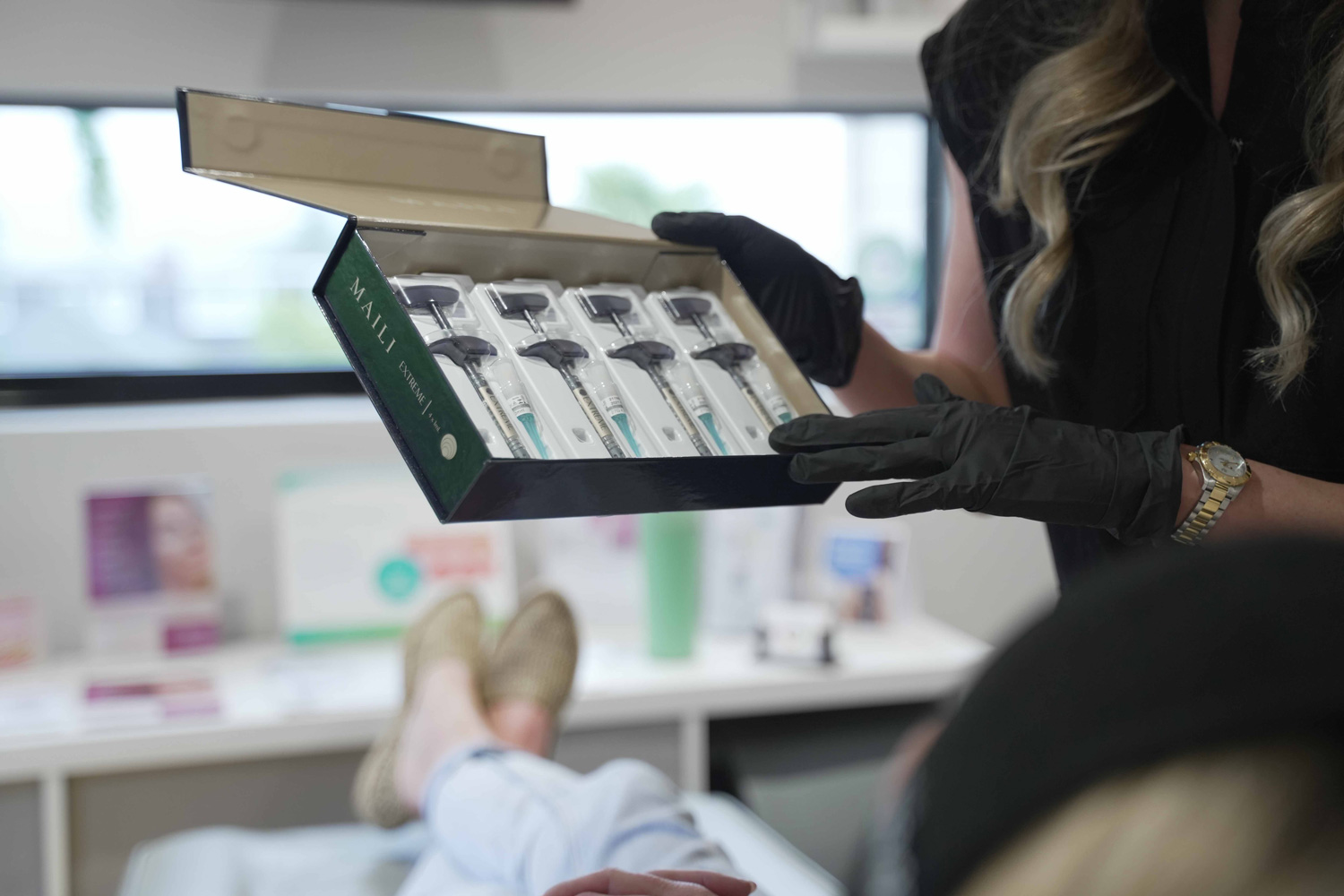
You are entitled to see the sealed box your product comes from, and to ask where it was sourced.
Ask What Happens If Something Goes Wrong
This is one of the clearest differences between simply receiving a treatment and receiving proper clinical care.
Even highly experienced practitioners encounter complications.
The important question is not whether a clinic claims complications “never happen”.
It is whether the practitioner understands the risks, recognises problems quickly and has a clear plan for managing them.
For example, dermal filler can very occasionally obstruct blood flow in a blood vessel. This is known as a vascular occlusion.
It is a time-sensitive complication. Delayed recognition and treatment can lead to serious tissue damage and, in extremely rare circumstances, visual complications.
A clinic providing dermal filler should therefore have a clear complication-management pathway.
Questions worth asking
What should I do if I am worried after treatment? How do I contact you outside normal clinic hours? Who will assess me if I develop a complication?
What is your procedure if you suspect a vascular occlusion? Do you have appropriate access to the medicines and clinical support required to manage filler complications? When would you refer a patient for emergency or specialist care?
Is there a charge for a clinical review if I think something is wrong?
I would be reassured by a practitioner who can answer those questions calmly and specifically.
I would be concerned by answers such as: “That never happens here.”
All procedures carry risk. Responsible practitioners do not pretend otherwise.
Check insurance
Your practitioner should also hold appropriate professional indemnity or medical malpractice insurance covering the treatments they actually provide.
Ask about it.
A professional clinic should not regard that as an unreasonable question.
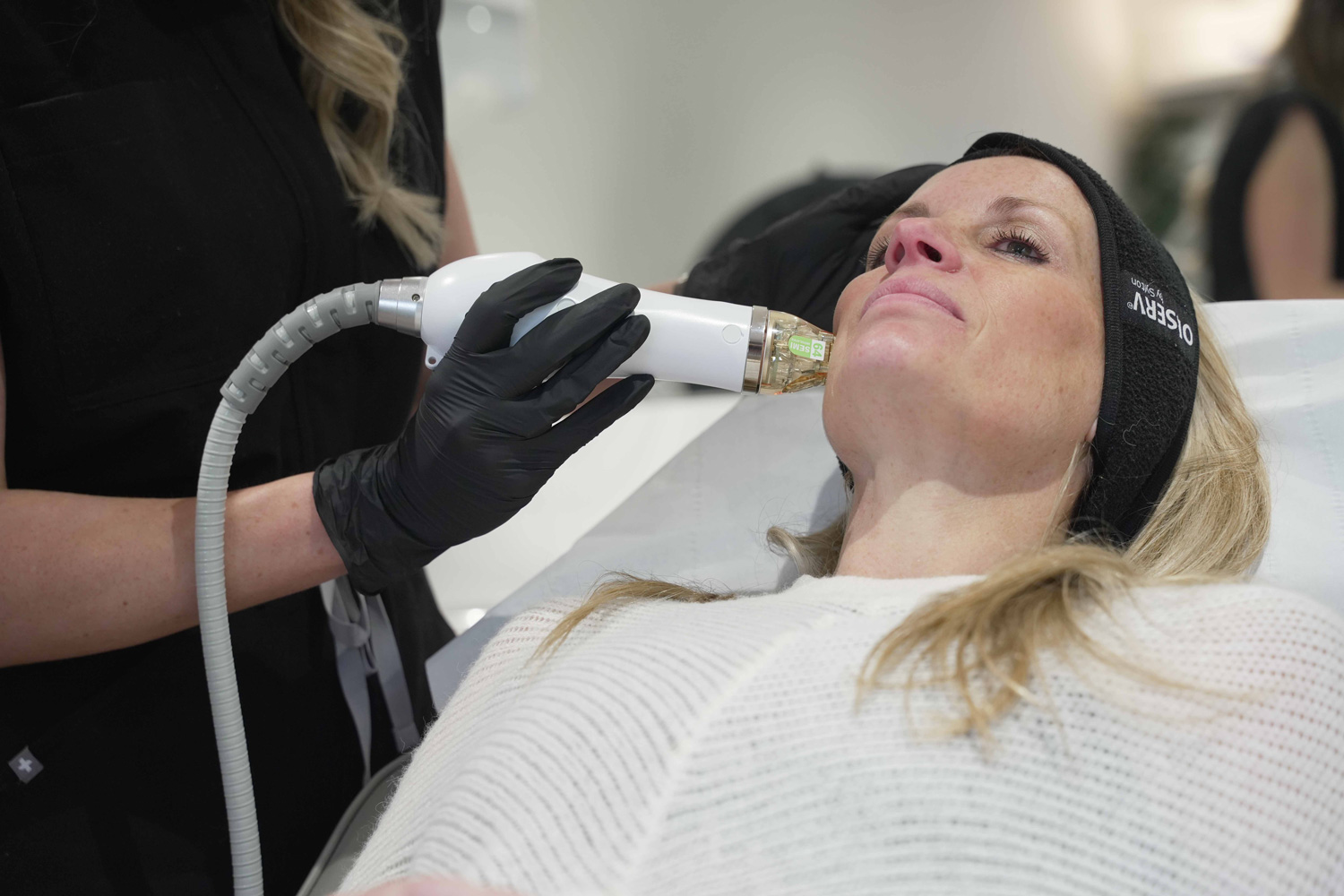
Gloves, a prepared treatment surface and a clinical room are the baseline, not a luxury.
Understand What The Law Does, And Does Not, Currently Protect You From
Aesthetic regulation is changing, which makes this particularly confusing for patients.
Here is the position in England at the time this guide was reviewed.
Treatments for under-18s
Since 1 October 2021, it has been a criminal offence in England to administer botulinum toxin or injectable cosmetic filler to somebody under 18 for cosmetic purposes, except in specific circumstances provided for by the legislation.
It is also an offence to make arrangements for those treatments to take place.
The proposed licensing scheme in England
The Health and Care Act 2022 gave the Government powers to introduce a licensing scheme for non-surgical cosmetic procedures in England.
The intention is to introduce greater oversight of practitioners, premises, training, qualifications, insurance and safety standards.
At the time this article was reviewed in September 2026, the wider licensing scheme was not yet in force.
Government proposals continue to develop through consultation and secondary legislation.
That means patients should not assume that somebody must already have a national government aesthetics licence simply because they are offering treatment.
What about CQC?
The Care Quality Commission regulates certain health and care activities in England.
However, CQC does not currently regulate every cosmetic treatment.
Routine cosmetic botulinum toxin injections and cosmetic dermal fillers, for example, are generally outside CQC’s scope simply because they are being provided for cosmetic purposes.
A clinic may legitimately be CQC registered for other regulated services it provides, while some of its cosmetic treatments sit outside that registration.
Equally, the fact that an aesthetics clinic is not CQC registered does not automatically mean that it is operating illegally.
What matters is whether the particular activities it provides require registration.
The practical reality
Regulation is evolving, but for now patients still need to make their own checks.
Do not rely solely on: an Instagram following; clinic décor; a professional-looking website; a long treatment menu; the word “medical” in a business name; certificates displayed on a wall.
Check the person, their training, their prescribing arrangements, the clinic systems and the aftercare.
Red Flags When Choosing An Aesthetic Clinic
None of these automatically tells you everything about a practitioner, but they should prompt further questions.
- extreme time-limited pressure to book immediately;
- promotional advertising of prescription-only medicines to the public;
- little or no meaningful consultation;
- a practitioner who will not give you their full name or professional details;
- unclear prescribing arrangements for botulinum toxin;
- a prescriber who will never assess you;
- products with unclear origin;
- treatment in an unsuitable or poorly equipped environment;
- treatment amounts decided before proper assessment;
- pressure to add treatments you had not considered;
- packages designed around using a fixed volume of filler regardless of assessment;
- a portfolio where everyone appears to have been treated towards the same look;
- vague answers about complications and emergency contact;
- no clear follow-up or review process;
- guaranteed results;
- risks being dismissed or minimised;
- reluctance to discuss professional indemnity.
Sometimes your instincts matter too.
If you feel hurried, pressured, embarrassed for asking questions or unsure about what you have agreed to, you do not have to proceed.
TAKE THIS TO YOUR APPOINTMENT
9 Questions To Ask Before Choosing An Aesthetic Practitioner
Save this list and take it to your consultation.
- Who are you professionally? What is the practitioner’s full name, professional background and registration number, and have you checked it independently?
- What aesthetics-specific training do you have? What qualification do they hold and how much experience do they have in the particular treatment you are considering?
- Who is prescribing my treatment? If a prescription-only medicine is involved, who is the prescriber and how will they assess you?
- What product are you using? Do you know exactly what will be used and can the clinic explain where it has been sourced?
- What will happen during my consultation? Will your medical history, expectations, risks, alternatives and suitability for treatment be properly assessed and documented?
- Can I see examples of your work? Have you seen outcomes on patients with a similar age, facial structure or concern to you?
- What happens if I have a complication? Is there a clear clinical pathway and appropriate access to the medicines, expertise and emergency support required?
- How do I contact you after treatment? Is there a clear aftercare and out-of-hours process?
- Are you appropriately insured? Does the practitioner hold insurance covering the treatment you are having?
If you cannot get clear answers to those questions, think very carefully before proceeding.
Choosing Well Is About Much More Than Price
Choosing an aesthetic clinic has very little to do with finding the cheapest appointment or the practitioner with the biggest Instagram account.
It is about choosing somebody with the right combination of training, professional judgement, honesty and clinical systems.
And interestingly, the qualities that tend to make treatment safer are often the same qualities that produce the most natural results.
A thoughtful practitioner does not simply agree with everything you ask for.
They assess. They explain. They manage expectations. They sometimes recommend less. And occasionally, they tell you not to have treatment at all.
That is not a practitioner losing a sale. That is a practitioner doing their job.
A good clinic should welcome every question in this guide. If asking those questions makes the room go quiet, you may already have learned what you needed to know.
AT EXTHETICS, EXETER
Considering Aesthetic Treatment With Us?
At Exthetics, we believe a consultation should give you enough information to make a confident, informed decision about whether treatment is right for you.
That includes the option not to proceed.
You are welcome to ask us every question in this guide.