
Botox vs Fillers: Key Differences Explained
If you’re exploring aesthetic treatments, you’ve probably come across Botox and dermal fillers. They are two of the most popular non-surgical treatments used to reduce the appearance of wrinkles and enhance facial features. However, despite their popularity, many people are unsure about the difference between the two.
Patients often ask whether Botox or fillers are better, which one lasts longer, and which treatment is right for their concerns. The truth is that while Botox and dermal fillers are both injectable treatments, they work in very different ways and treat different signs of ageing.
In this guide, we’ll explain the key differences between Botox vs fillers, how each treatment works, and how to determine which option may be most suitable for you. At Exthetics Clinic in Exeter, treatments are overseen by Level 7 Nurse Prescriber Anna Lee, ensuring treatments are performed safely with a focus on subtle, natural-looking results.
What Is Botox?
Botox one brand name of a prescription-only medicine derived from botulinum toxin, which temporarily relaxes muscles responsible for expression lines.
When Botox is injected into specific muscles, it blocks nerve signals that cause muscle movement. As the muscle relaxes, the skin above it smooths out, helping to reduce the appearance of wrinkles.
Botox is commonly used to treat dynamic wrinkles, which are lines that appear when the face moves.
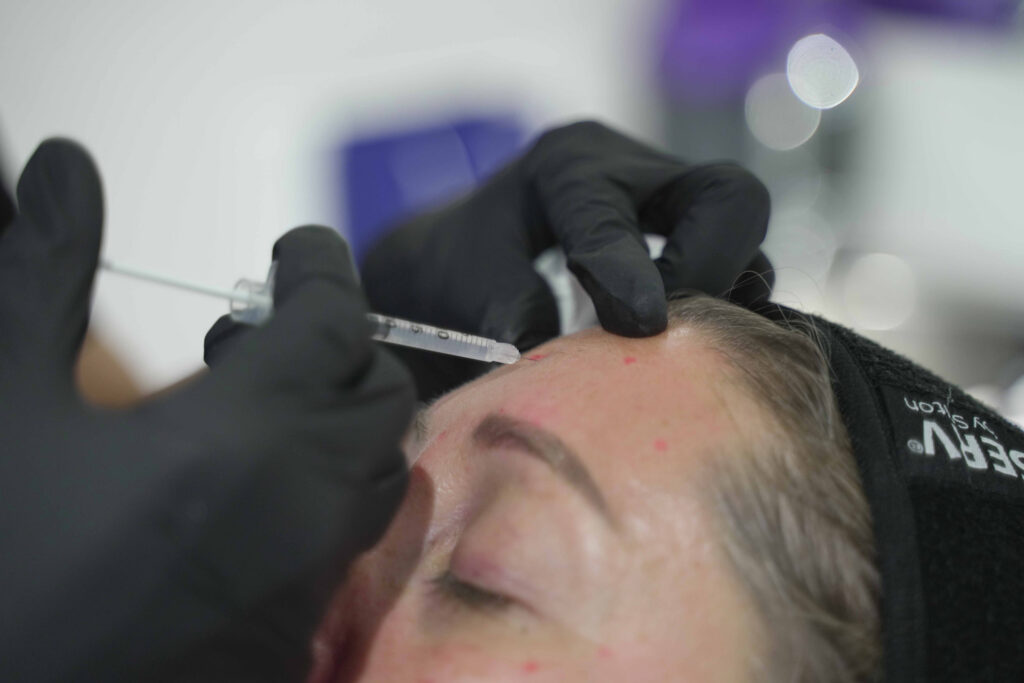
Areas Botox commonly treats
The upper face is the most common treatment area. Botox can treat:
- Frown lines between the eyebrows
- Horizontal forehead lines
- Crow’s feet around the eyes
- Bunny lines on the nose
- Brow lift treatments
- Jawline slimming or teeth grinding
Results typically begin to appear within 3–7 days, with full results visible after around two weeks. The effects usually last three to four months, after which the muscles gradually regain movement.
Because Botox targets muscle movement rather than skin volume, it is most effective for expression lines rather than deeper folds in the skin.
Learn more about Botox, anti-wrinkle injections.
What Are Dermal Fillers?
Dermal fillers are injectable treatments designed to add volume beneath the skin. Most filler treatments use hyaluronic acid, a substance naturally found in the body that helps maintain hydration and skin structure.
As we age, the skin gradually loses collagen, elastin, and fat. This leads to hollow areas, deeper folds, and changes in facial contours. Dermal fillers work by restoring volume to these areas, helping to create a smoother and more youthful appearance.
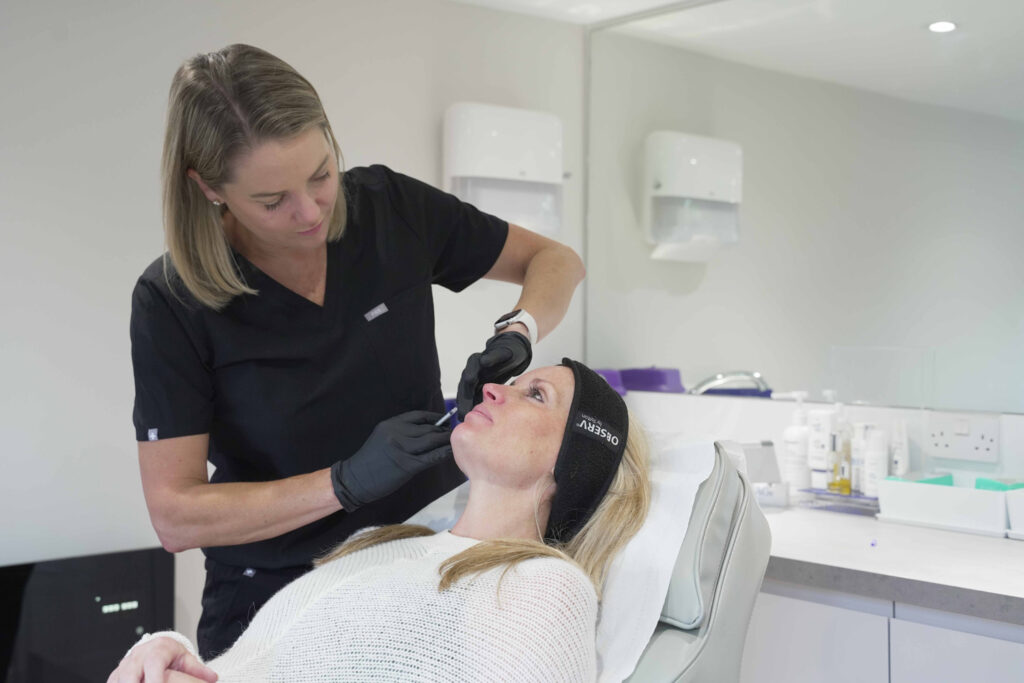
Areas fillers commonly treat
Fillers are typically used to enhance or restore volume in areas such as:
- Cheeks lips and jawline
- Nasolabial folds (smile lines)
- Marionette lines
- Chin and jawline definition
- Tear troughs under the eyes
Unlike Botox, fillers address static wrinkles, which are lines visible even when the face is relaxed.
Results are visible immediately after treatment and can last between 6–12 months, depending on the type of filler used and the area treated.
Learn more about dermal Fillers.
Botox vs Fillers: Key Differences
Although both treatments involve injections, they serve different purposes.
| Feature | Botox | Dermal Fillers |
|---|---|---|
| Purpose | Relaxes muscles | Adds volume beneath the skin |
| Treats | Dynamic wrinkles | Static wrinkles and volume loss |
| Common areas | Forehead, frown lines, crow’s feet | Cheeks, lips, jawline |
| Results appear | 3–7 days | Immediate |
| Duration | 3–4 months | 6–12 months |
| Treatment goal | Reduce muscle movement | Restore lost volume and enhance facial contours |
Understanding these differences helps determine whether Botox, fillers, or a combination of both treatments may be appropriate.
Which Wrinkles Does Botox Treat?
Botox works best for dynamic wrinkles, which are caused by repeated muscle movement.
Examples include:
- Forehead lines caused by raising the eyebrows
- Frown lines from facial expressions
- Crow’s feet when smiling
- Bunny lines on the nose
Because Botox relaxes the underlying muscles, it prevents the skin from creasing in these areas. Over time, this can help soften existing lines and prevent deeper wrinkles forming.
Which Concerns Do Fillers Treat?
Dermal fillers are used when ageing results from volume loss rather than muscle movement.
Common examples include:
- Hollow cheeks
- Deep smile lines
- Loss of lip volume
- Jawline definition
- Facial asymmetry
By restoring volume, fillers can enhance facial structure and support the skin. This helps smooth deeper folds and improve overall facial balance.
The exact results can vary depending on the type of filler used and the area treated.
Can Botox and Fillers Be Used Together?
Yes, Botox and dermal fillers are often used together to achieve more comprehensive facial rejuvenation.
While Botox relaxes muscles responsible for expression lines, fillers help restore lost volume and enhance facial structure.
For example:
- Botox can soften crow’s feet and forehead lines
- Fillers can restore volume to cheeks or lips
Together, these treatments can improve fine lines and wrinkles while enhancing facial contours.
During consultation, Anna will assess your facial anatomy and recommend a treatment plan based on your concerns and goals.
Are Botox and Fillers Safe?
Both Botox and dermal fillers are considered safe when performed by a qualified medical professional.
At Exthetics Clinic in Exeter, treatments are carried out by Anna Lee, a Level 7 Harley Academy-trained Nurse Prescriber, with over 20 years of nursing experience.
As with any medical treatment, there can be temporary side effects, including:
- Mild swelling
- Redness at the injection site
- Bruising
- Tenderness
These usually resolve within a few days.
Choosing an experienced medical practitioner helps ensure treatments are performed safely and results remain natural.
Botox vs Fillers: Which Is Best?
The answer depends on the cause of your concerns.
If your lines appear when you move your face, Botox may be the most effective treatment. If your concerns relate to volume loss or facial structure, filler treatments may be more appropriate.
In many cases, a combination approach may provide the best results.
At Exthetics, consultations focus on understanding each patient’s anatomy and goals. Treatments are always tailored to achieve subtle, natural-looking outcomes.
Botox Treatments in Exeter
If you are considering Botox in Exeter or would like advice on whether Botox or dermal fillers may be suitable for you, a consultation can help determine the most appropriate approach.
At Exthetics Clinic, treatments are delivered in a calm, discreet environment with a focus on safety, education, and natural results.
Anna Lee’s extensive experience in facial anatomy and aesthetic medicine allows treatments to be tailored carefully to each individual.
Learn More About Botox Treatments
If you would like to explore how Botox treatments can help soften expression lines and enhance natural facial appearance, you can learn more about Botox treatments at Exthetics Clinic Exeter or arrange a consultation to discuss your concerns.
Understanding the difference between Botox vs fillers is the first step toward choosing the treatment that aligns with your goals and achieving results that feel confident, natural, and refreshed.
What’s better for you, Botox or fillers?
Neither treatment is “better” they treat different types of ageing.
Botox works by relaxing muscles using botulinum toxin, which softens dynamic wrinkles caused by facial movement such as:
- frown lines
- forehead lines
- crow’s feet
Dermal fillers, on the other hand, are designed to restore lost volume and improve facial contours. They are commonly used for:
- cheeks
- lips
- nasolabial folds
- jawline definition
At Exthetics Clinic in Exeter, the best treatment depends on your skin concerns, facial anatomy and treatment goals. Many patients achieve the most natural results with a combination of Botox and dermal fillers.
What is the most rejuvenating - Botox or fillers?
Both treatments can help you look younger, but they work in different ways.
Botox helps reduce the appearance of wrinkles caused by muscle movement, particularly in the upper face.
Dermal fillers help restore volume, which can improve facial structure and soften deeper lines.
For example:
- Botox smooths fine lines and wrinkles such as crow’s feet.
- Fillers restore volume in areas such as the cheeks, lips and jawline.
In many cases, combining Botox and filler treatments creates the most natural facial rejuvenation because it addresses both wrinkles and volume loss.
Can Botox and fillers be used together?
Yes, Botox and dermal fillers are frequently used together.
This approach is sometimes referred to as combination injectable treatment because each treatment addresses a different cause of ageing.
Botox relaxes muscles responsible for expression lines, while fillers add volume and enhance facial contours.
Used together, they can improve overall facial balance and enhance natural features.
Are Botox and fillers safe?
Both treatments are considered safe when performed by a qualified medical professional.
Common temporary side effects include:
- redness at the injection site
- mild swelling
- bruising
- tenderness
These effects usually settle within a few days.
Choosing an experienced practitioner is important to ensure treatments are delivered safely and achieve natural-looking results.
How long do Botox and fillers last?
Botox typically lasts 3–4 months, although this can vary slightly depending on the individual and treatment area.
Dermal fillers generally last 6–12 months, depending on the product used and the area treated.
Your practitioner will recommend the most appropriate treatment schedule to maintain results.
Where can I get Botox in Exeter?
If you’re considering Botox or dermal fillers in Exeter, it’s important to choose a qualified medical clinic.
At Exthetics Clinic Exeter, treatments are carried out by Level 7 Nurse Prescriber Anna Lee, with a focus on natural results, patient safety and tailored treatment plans.
A consultation allows your practitioner to assess your concerns and recommend the most appropriate treatment.

What Should Happen at Your First Aesthetic Consultation?
A nurse prescriber’s guide to what a good aesthetic consultation should cover, from your health history to honest limits and time to decide.
How to Choose a Safe Aesthetic Clinic | UK Nurse Prescriber Guide
Inside the treatment room at Exthetics, Exeter. EXTHETICS JOURNAL / PATIENT GUIDE How To Choose A Safe Aesthetic Clinic A nurse prescriber’s guide to choosing
Profhilo in Exeter – More Than a Skin Booster
Profhilo bio-remodelling in Exeter from £295. Nurse-led, medically supervised. Improve skin firmness, hydration and quality. Save Face accredited.