
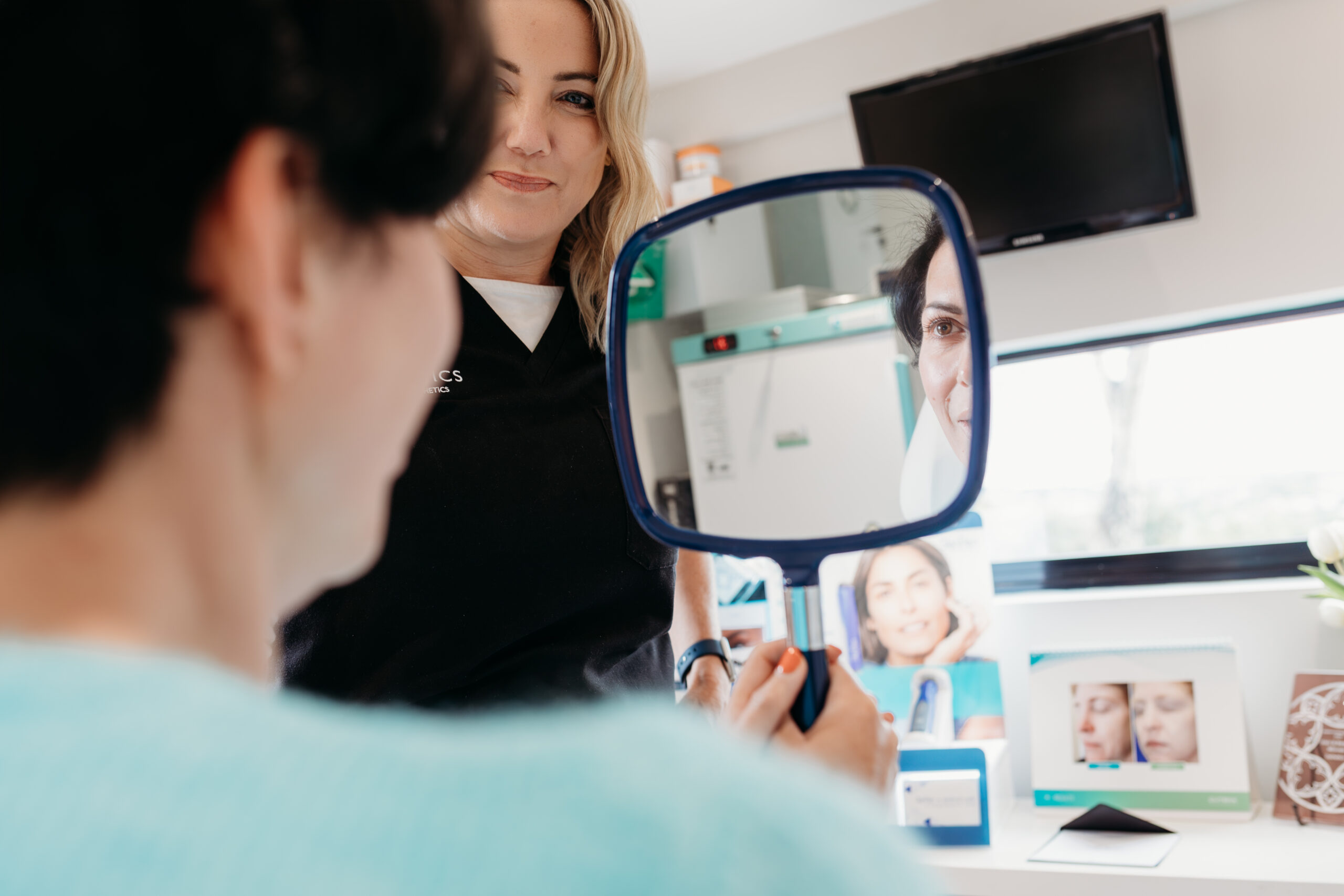
Looking together, before any decision is made about treatment.
Exthetics Journal / First-time patients
What Should Happen At Your First Aesthetic Consultation?
A nurse prescriber’s guide to what a good consultation should cover, before you decide whether aesthetic treatment is right for you.
By Anna Lee, Independent Nurse Prescriber
If you are considering aesthetic treatment for the first time, knowing where to begin can be the hardest part.
You may have spent hours trying to work out whether you need filler, skin boosters, anti-wrinkle treatment, polynucleotides, microneedling or something else entirely.
My advice is simple. You do not need to diagnose yourself before your first aesthetic consultation.
Choosing a treatment before anyone has assessed you can make the whole process more confusing.
Where some consultations start
“Which treatment would you like?”
Where a good one starts
“What would you like some help with?”
Two very different questions.
As a registered nurse and Independent Nurse Prescriber, I see the consultation as one of the most important parts of aesthetic treatment. It is where I learn about your health, your concerns and what you actually want to achieve.
It is also where we decide whether treatment is appropriate at all.
A consultation should never simply be the few minutes before somebody reaches for a syringe.
Start With What Is Bothering You
You do not need to know the name of a treatment. You might simply look more tired than you feel, or notice changes in your skin, around your eyes or in your lower face.
That is enough to start a conversation.
I want to understand what bothers you, what does not, and what a good result looks like to you. For one person, that is softening a particular line. For another, it is better skin quality rather than a change in facial structure. Somebody else may simply want to look less tired.
In fact, I would rather you told me, “This is what is bothering me, but I do not know what I need.” Two people can appear to have the same concern and need completely different approaches.
A consultation should turn a broad concern into a sensible clinical plan. Whatever treatment happens to be popular this month is beside the point.
Questions About Your Health, Not Just Your Face
Aesthetic medicine does not happen separately from the rest of your health. Depending on the procedure, you may be asked about:
- current medication and allergies
- previous medical conditions, including autoimmune conditions
- pregnancy or breastfeeding
- skin conditions
- previous aesthetic treatments, reactions or complications
- previous surgery or dental treatment
- supplements or medicines that may affect bleeding or healing
Some of these may seem unrelated to your cosmetic concern. They are not. They help us decide whether a treatment is safe and appropriate for you.
Sometimes a person’s history means I recommend delaying treatment, changing the plan or not treating at all. That is exactly what a consultation is for.
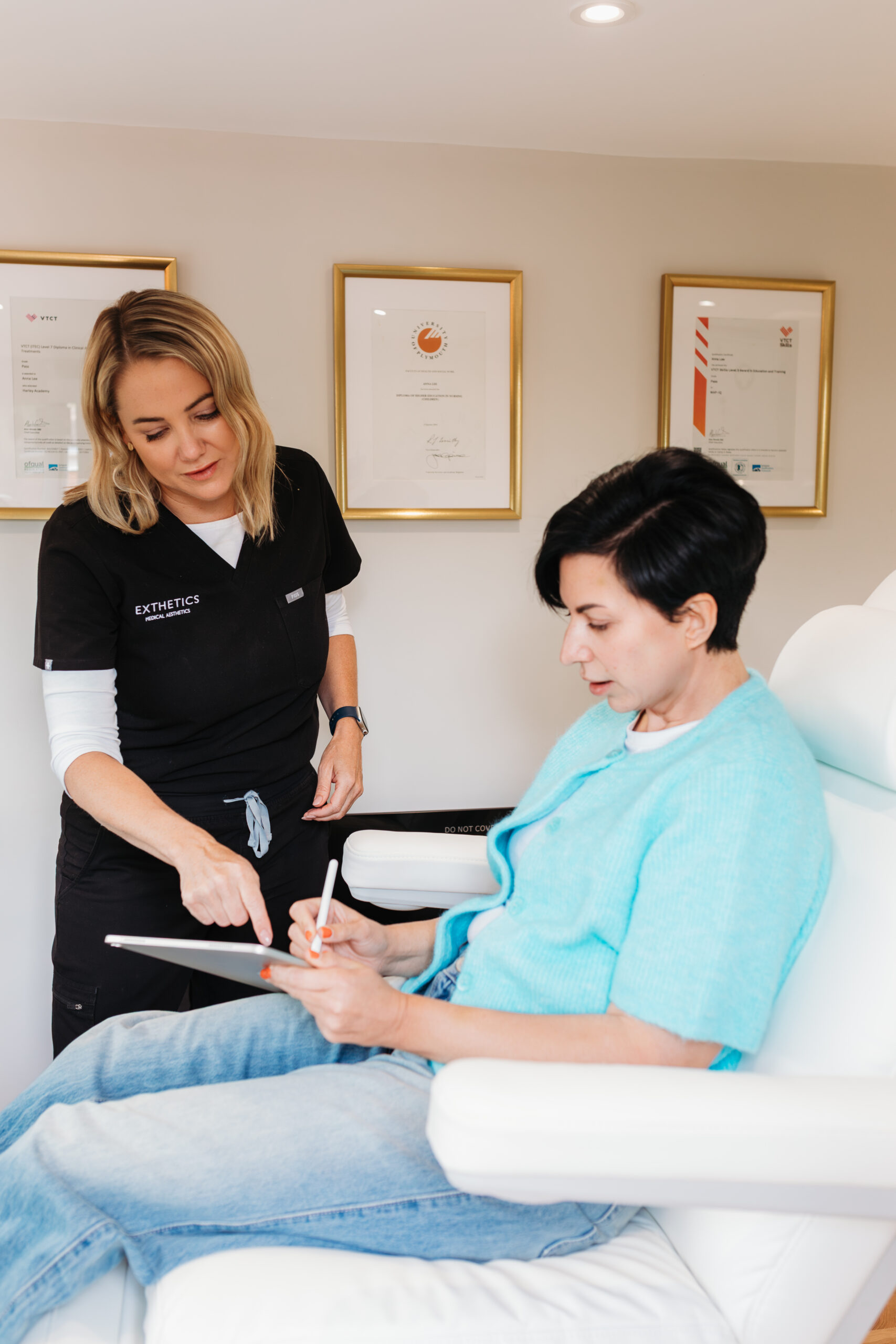
Your medical history shapes what is safe and appropriate for you.
Assessment Should Come Before Any Recommendation
Many people assume every problem has a single treatment. Faces rarely work like that.
A line, shadow or change in facial shape may be influenced by skin quality, volume loss, changes in underlying support, muscle movement, pigmentation, dehydration, inflammation, lifestyle, sun exposure and normal ageing.
So someone asking about dermal filler may benefit more from improving skin quality. Another person convinced they need filler may find the change is largely related to muscle movement. Someone else may not need an injectable treatment at all.
If you ask me about one area, I will still look at your face as a whole. I am not looking for more to treat. Facial features work together. Good treatment should preserve balance, expression and individuality, and treating one area in isolation can leave a result that feels disconnected from the rest of your face.
A practitioner should be able to explain what they are seeing without making you feel self-conscious about normal features or normal ageing.
You should never leave with a shopping list of everything supposedly wrong with you.
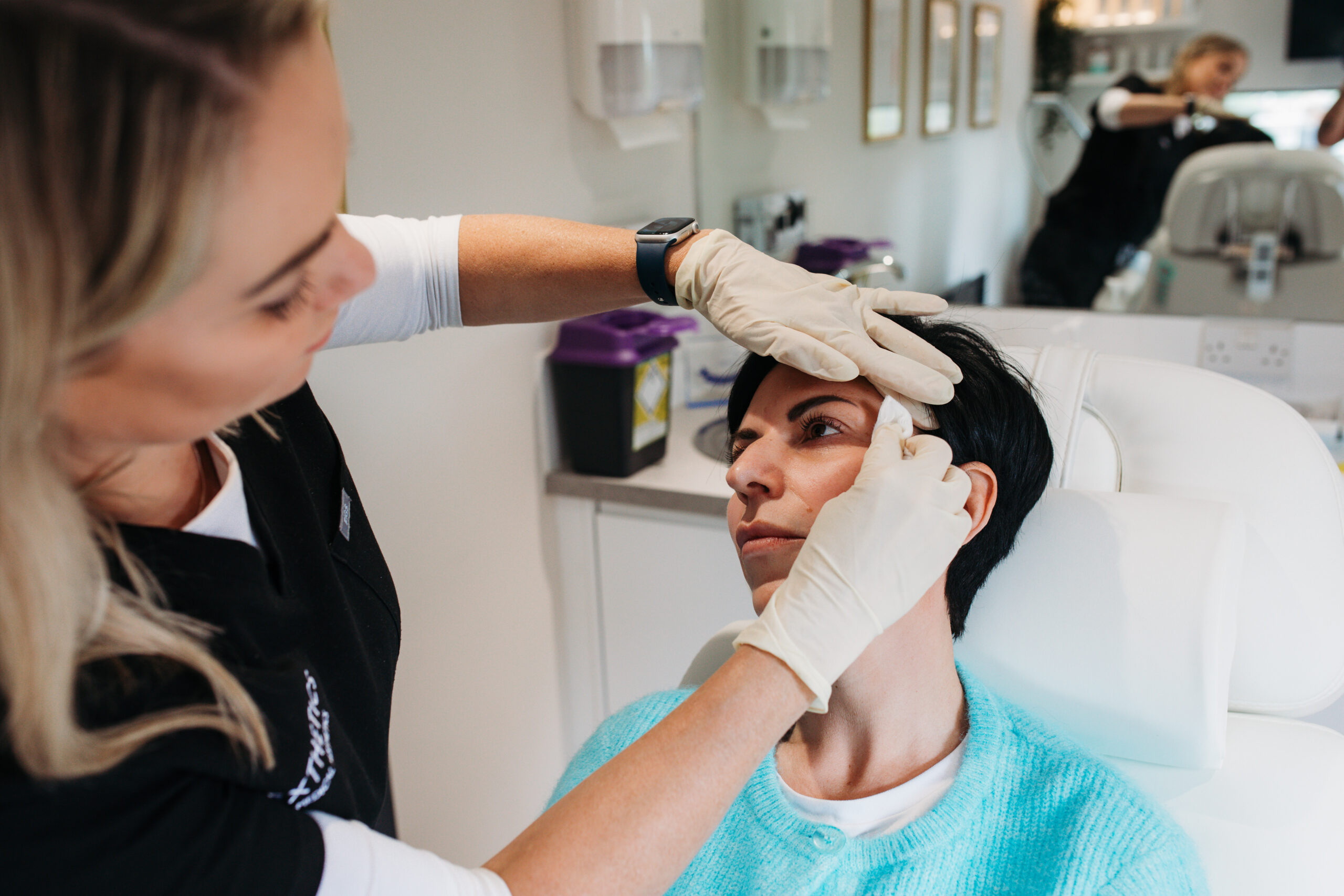
Assessing the face as a whole.
There is a big difference between clinical assessment and creating insecurity in order to sell treatment.
Skin Assessment That Looks Beyond The Surface
Pigmentation, dehydration, congestion, redness, vascular changes and sun damage are not always obvious under normal lighting.
At Exthetics, our skin consultations can include OBSERV skin imaging, which lets us look beyond what is immediately visible and build a clearer picture of your skin.
But the technology is only one part of the assessment. I also want to know:
- what products you use now
- how reactive or sensitive your skin is
- your lifestyle and budget
- how much downtime you can realistically tolerate
- how much time you can commit
An elaborate plan that does not fit your actual life has little value. The best plan is clinically sensible and realistic for you to follow.
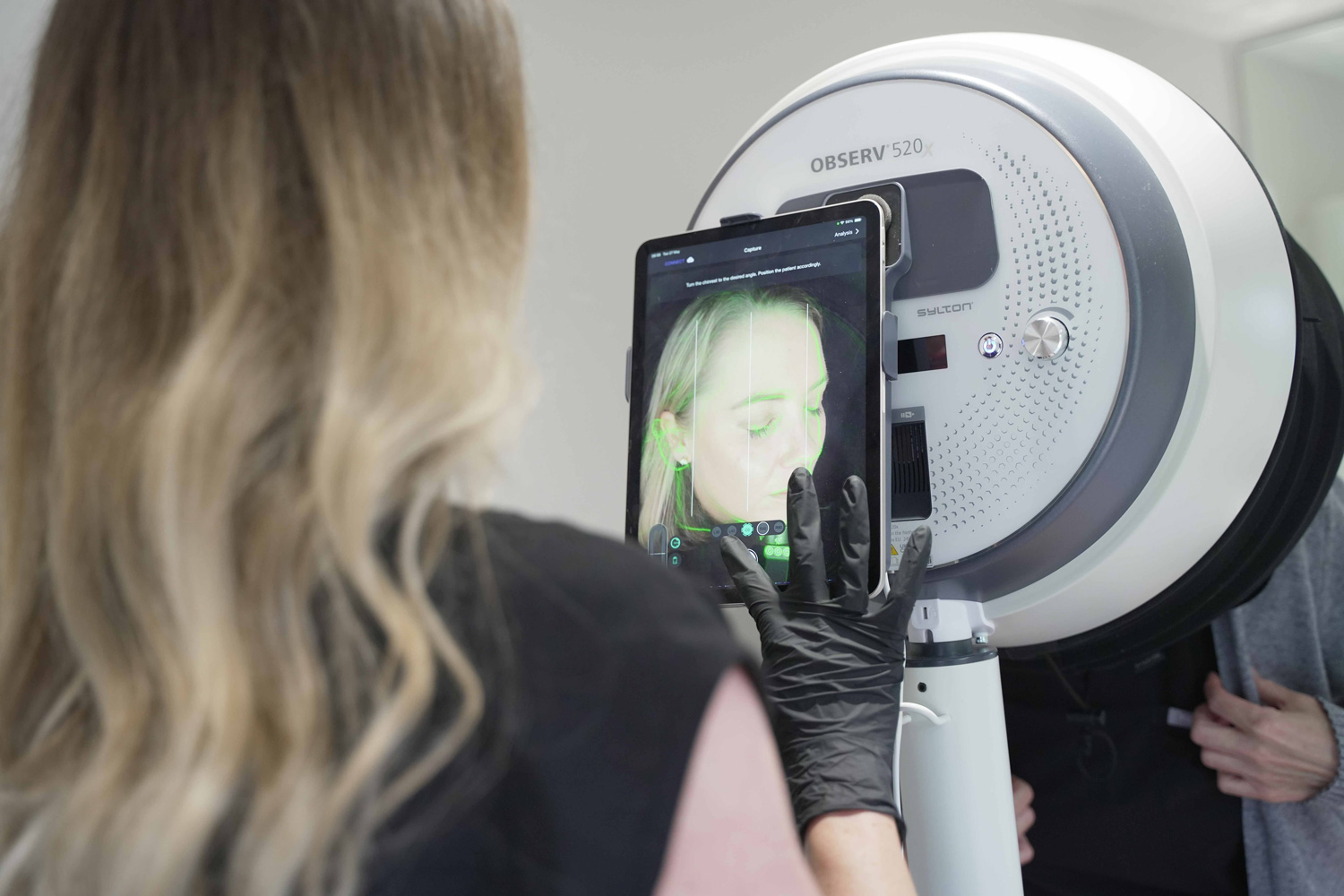
OBSERV imaging helps us see beyond what is visible on the surface.
Honest Limits, Risks And Complications
Aesthetic treatment has limitations. That is not a negative. You simply need to understand them before you decide.
A good consultation covers:
- what may improve, and what is unlikely to change
- how subtle or noticeable the result may be
- how quickly changes are likely to appear
- whether more treatment or maintenance may be needed
- likely downtime, side effects and risks
Good aesthetic medicine is about balancing potential benefit against risk, and deciding whether that balance makes sense for you.
Be wary of promises of perfection, and of anyone who makes a treatment sound completely risk-free. No procedure is. Some reactions are minor and temporary, such as swelling, tenderness or bruising. Others are uncommon but potentially much more significant.
So a practitioner who talks openly about complications should reassure you. Before treatment, you should know which symptoms are normal, which need reviewing, how complications are managed, when further medical assessment may be needed, and how to contact the clinic if you are worried, including outside normal hours.
A practitioner who prepares for complications is not a dangerous practitioner. One who pretends complications cannot happen should concern you far more.
Prescribing Is Part Of The Consultation
Some aesthetic treatments involve prescription-only medicines. Botulinum toxin is one of them.
Prescribing should never be paperwork behind the scenes. I am professionally responsible for assessing whether a medicine is appropriate for you.
For nurses and midwives who independently prescribe medicines for elective non-surgical cosmetic procedures, the Nursing and Midwifery Council requires a face-to-face consultation and appropriate clinical assessment before prescribing.
So it is perfectly reasonable to ask:
A fair question to ask
“Who is prescribing this for me, and when will they assess me?”
You should know who is taking responsibility for that decision.
Further reading: How to choose a safe aesthetic clinic.
Alternatives, Including Doing Nothing
A consultation is not successful simply because it ends in a booking.
Sometimes the right outcome is a different treatment, improving the skin first, or waiting. And sometimes my advice is, “I do not think you need to do anything.”
Patients do not always see themselves objectively. Social media, filters and constant exposure to altered images have changed the way many of us see our own faces. A responsible practitioner should not reinforce every perceived imperfection.
Part of the job is clinical judgement. Occasionally, that means saying no.
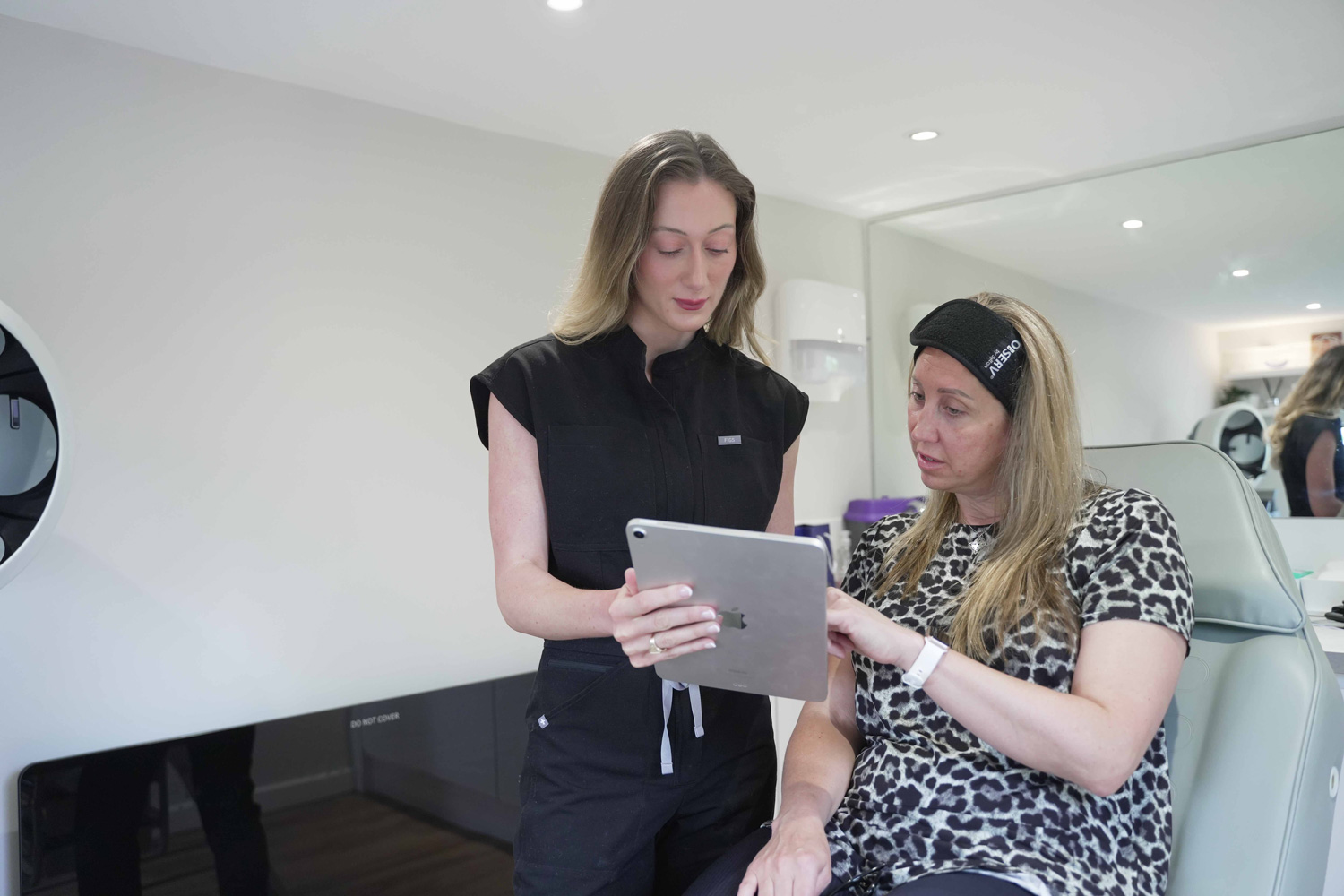
Talking through the options, including the option to wait.
Time To Think, With No Pressure To Decide
A consultation should leave you informed, with time to think and ask questions.
What matters is that the decision is properly assessed and genuinely yours. Nobody should say yes simply because saying no feels awkward once they are sitting in the treatment chair.
You should never feel you have wasted anybody’s time by deciding not to go ahead.
Quick Answers About Aesthetic Consultations
How Long Does An Aesthetic Consultation Take?
At Exthetics, a new patient consultation is booked for 60 minutes. A first consultation for anti-wrinkle treatment is booked for 45 minutes.
Do You Need A Consultation Before Anti-Wrinkle Injections?
Yes. Botulinum toxin is a prescription-only medicine, and a nurse prescriber must see you face to face and assess you before prescribing it.
Can You Have Treatment On The Same Day As Your Consultation?
Sometimes. Same-day treatment can be clinically appropriate, particularly for established patients or for treatments that do not involve prescription medicines. It is not automatically a warning sign, as long as the decision is properly assessed and genuinely yours.
Can I Have A Consultation Online?
For skincare, yes. Exthetics offers a 30-minute online skincare consultation via Zoom. Injectable treatments that need a prescription require a face-to-face consultation first.
What Should I Ask At My Consultation?
Start with “Who is prescribing this for me, and when will they assess me?” Then use the checklist below.
What To Expect At Exthetics In Exeter
Exthetics is a nurse-led medical aesthetics and skin clinic. My approach is centred on safe practice, honest advice and results that enhance your appearance rather than change who you are.
A new patient consultation is booked for up to an hour, so there is time to talk properly. There is no obligation to book treatment. The purpose is to decide what, if anything, is appropriate for you. Current consultation fees are on our pricing page.
What Your Consultation May Include
No obligation to book
- Your medical history and previous treatments
- Your main concerns and what you would like to achieve
- Examination and clinical assessment
- OBSERV skin analysis, for skin consultations
- Treatment options, and alternatives to treatment
- Likely results and limitations
- Relevant risks and aftercare
- Budget, timelines and downtime
- A personalised treatment plan
- Plenty of opportunity to ask questions
You can also browse treatments by concern first.
Before you leave
What You Should Leave A Consultation Knowing
- What your practitioner believes is causing or contributing to your concern.
- Which options are available to you.
- Why a particular treatment has been recommended.
- What it can realistically achieve.
- What it cannot achieve.
- The important risks and expected side effects.
- How much treatment may be required.
- What it will cost.
- What happens afterwards.
- Who to contact if you have a concern.
Most importantly, you should feel completely comfortable saying yes, no, or “I would like to think about it.”
A good consultation should leave you clearer, not more insecure. You should feel the person opposite you is recommending what is appropriate for you, rather than simply what can be sold.
Treatment
Sometimes it leads to treatment you understand and have chosen.
A Different Plan
Sometimes it leads to a different plan from the one you expected.
Nothing At All
And sometimes it leads to doing nothing at all.
All three can be signs of a good consultation.
At Exthetics, Exeter
Ready To Talk It Through?
If you are considering aesthetic or skin treatment in Exeter, you do not need to choose from the treatment menu first. Bring me the concern and we can work out the options together.